Edition Three · Culture & Democracy
Culture and Democracy: What Makes Culture a Democratic Force?
About the contributor
Silvia Porretta
Nessuno Indietro APS
No Simple Solutions, Only Intelligent Choices: Culture as a Democratic Force
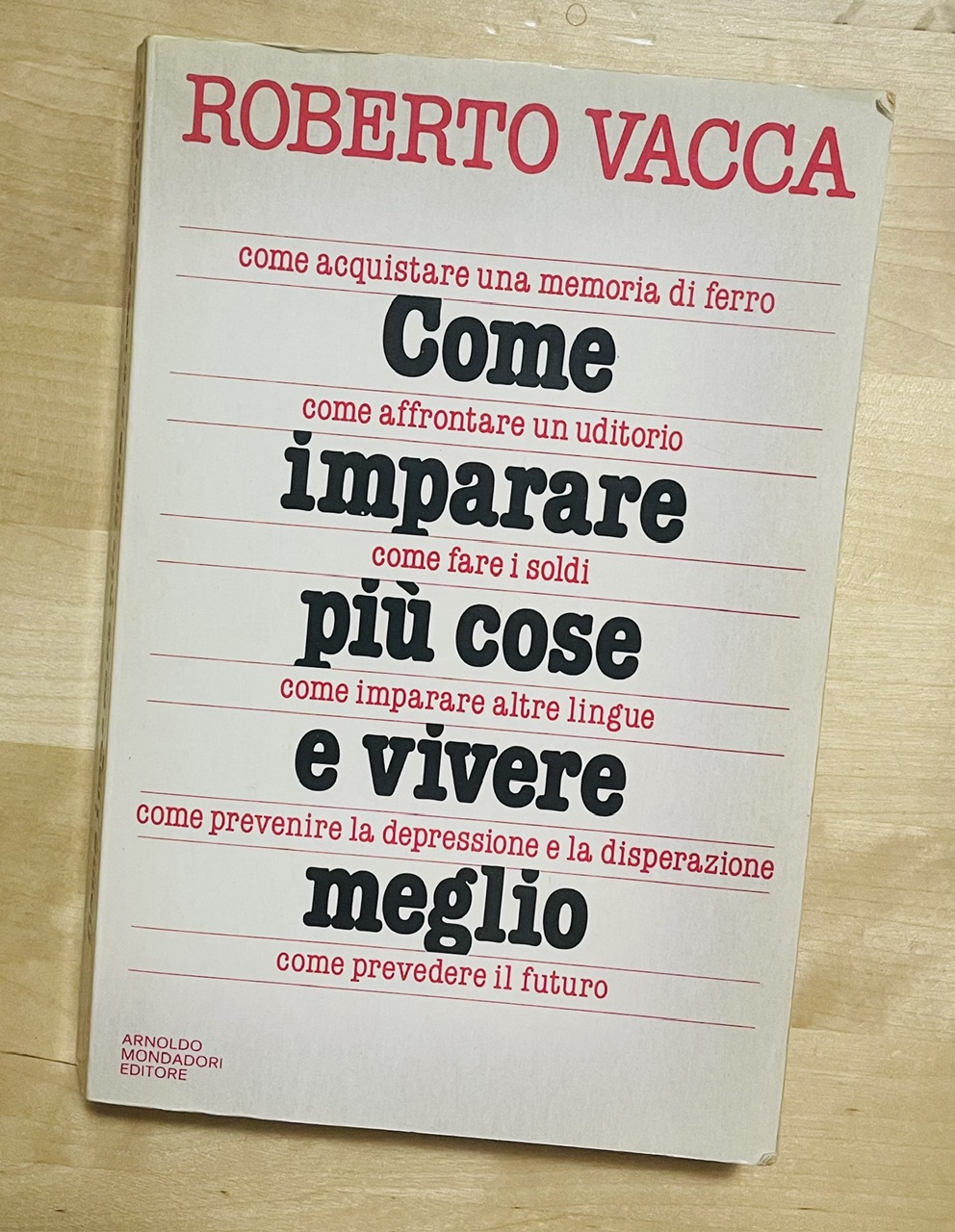
The invitation to contribute to this edition of Visions from Our Network reached me the day after I unexpectedly encountered a 1981 Italian book: Come imparare più cose e vivere meglio (How to Learn More Things and Live Better) by Roberto Vacca.
Vacca is one of those remarkable figures now mentioned far too rarely. An engineer and mathematician, he is also a science populariser, futurist, and author of science fiction and political fiction. His work ranges from adapting the Flesch readability formula to Italian to creating new worlds in fiction and speculative essays: an uncommon fusion of scientific expertise and imagination.
I bought the book out of curiosity and began leafing through it while sitting in a waiting room before a routine medical appointment. At first, its opening chapters seemed almost obvious. I smiled as I recognised in the author a spirit I also recognise in myself: that of someone who gets out of bed wanting to learn and rarely goes back to sleep without having tried to discover at least one new thing (and who cannot understand why others do not feel the same urgent desire!). But Vacca’s argument was neither dated nor obvious.
Forty-five years later, after the internet, smartphones, social media, algorithms and artificial intelligence have transformed society, the world in which the book was written can seem almost a thousand years away. Yet those chapters offered one of the most timeless answers I have encountered to the question: what makes culture a democratic force?
Vacca argues that learning requires motivation and exposure. Motivation pushes us towards a goal. But we cannot want to learn something if we do not know it exists. We therefore need exposure: easy access to people who know, have seen or experienced more than we have; to books; and to every medium through which knowledge can be shared.
His argument then goes further. Humanitarian principles and good intentions are necessary, but not enough to produce good actions. To know whether an action is genuinely good, we must try to understand and anticipate its consequences. The more complex the level at which we act (from an individual decision to the administration of a company, a city, a country or the planet) the more extensive our knowledge of facts, systems and mechanisms must be.
But caution is needed: knowledge does not automatically make people moral. It is necessary, Vacca insists, but not sufficient. Ignorance cannot protect us from doing harm. Limited knowledge (what he calls a “half-culture”) can be especially dangerous because it gives us unjustified confidence in our judgements.
This distinction is fundamental to democracy. Citizens are asked to form opinions about complex issues whose consequences affect others. Democratic participation cannot consist only in the right to express a preference. It also requires understanding the world well enough to question explanations, compare sources, recognise uncertainty, think critically and consider what different decisions may produce.
Vacca is particularly suspicious of religious or political “prophets” who offer ready-made truths. Their message is not: “Go into the world and acquire more knowledge.” It is: “Come to us; we already know everything you will ever need to know.” A democratic culture does the opposite. It does not tell people what to think. It gives them the encounters, knowledge and intellectual tools through which they can think, doubt and decide for themselves.
This is why a book written almost half a century ago feels so contemporary. We have access to more information than Vacca could have imagined. But information does not automatically create understanding. We still need to distinguish reliable knowledge from misinformation, connect fragments and resist the certainty generated by partial knowledge. The problem is our capacity to transform information into understanding, and understanding into responsible choices.
A current controversy in Italy offers a revealing example. Rai Scuola, the educational channel of Italy’s public broadcaster, may disappear from terrestrial television in October 2026, although Rai states that its educational content will remain available through a digital platform: accessible content, but different conditions of exposure.
Television may appear almost anachronistic, yet it remains in many homes, especially multigenerational ones. A television channel can be encountered accidentally: someone may discover a lesson or field of knowledge they would never have searched for online. This is neither an argument against digital platforms nor a nostalgic defence of television. It is a reminder that a democratic cultural ecosystem must preserve not only access to what people already want, but opportunities to encounter what they do not yet know they might need. Culture becomes a democratic force when it expands this possibility.
Vacca closes the chapter by borrowing an advertising line: there are no simple solutions, only intelligent choices. Culture helps make those choices possible.
Author note
Silvia Porretta is a Cultural and Creative Industries practitioner, independent policy researcher and PhD in Political and Social Sciences. Her work focuses on creative ecosystem development, governance and public policies, combining over twenty years of professional practice with academic research. She also actively contributes to civic engagement through Nessuno Indietro APS.
Relevant link
www.nessunoindietroaps.it
Visions from Our Network